
My Herb Store
Pure, Potent & Proven
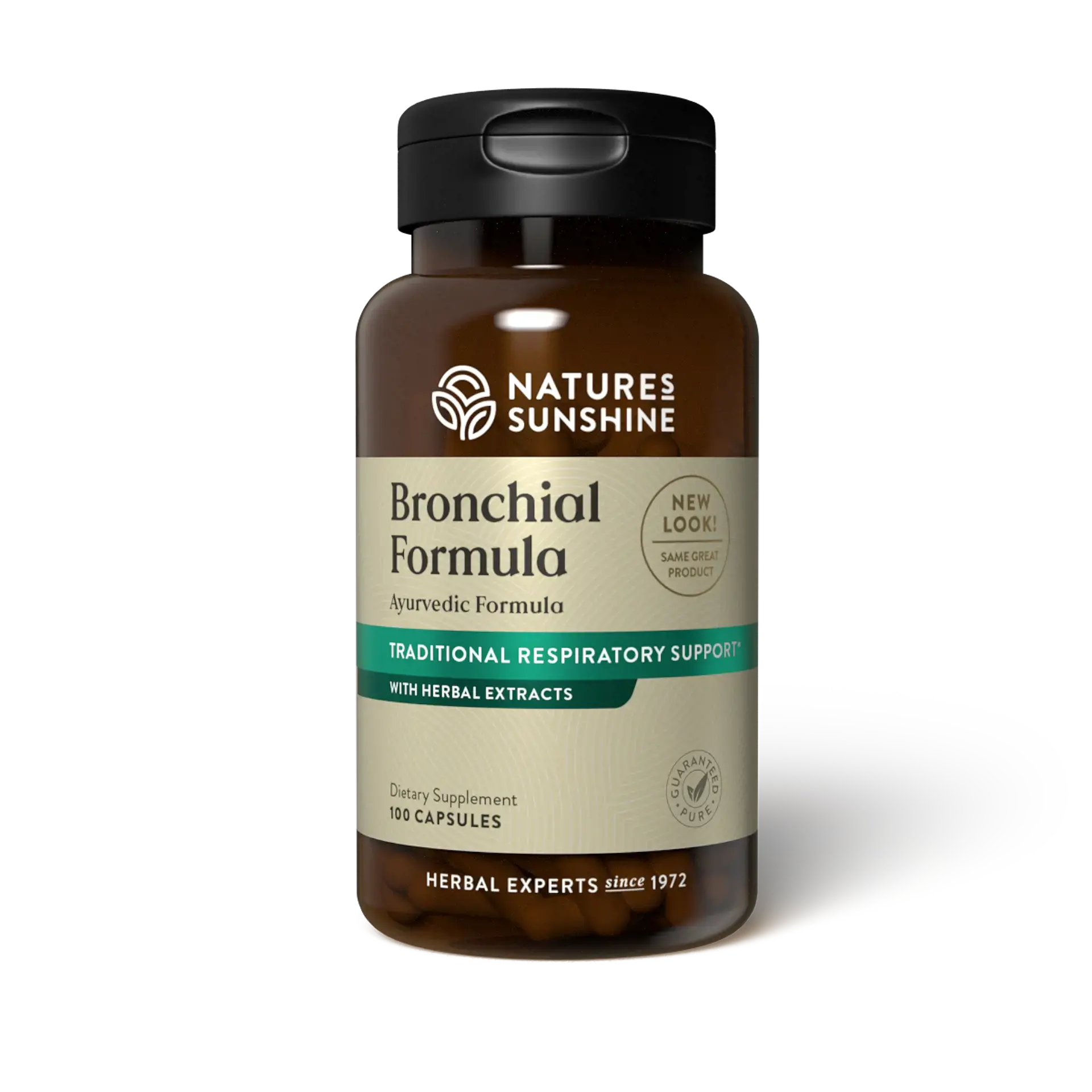








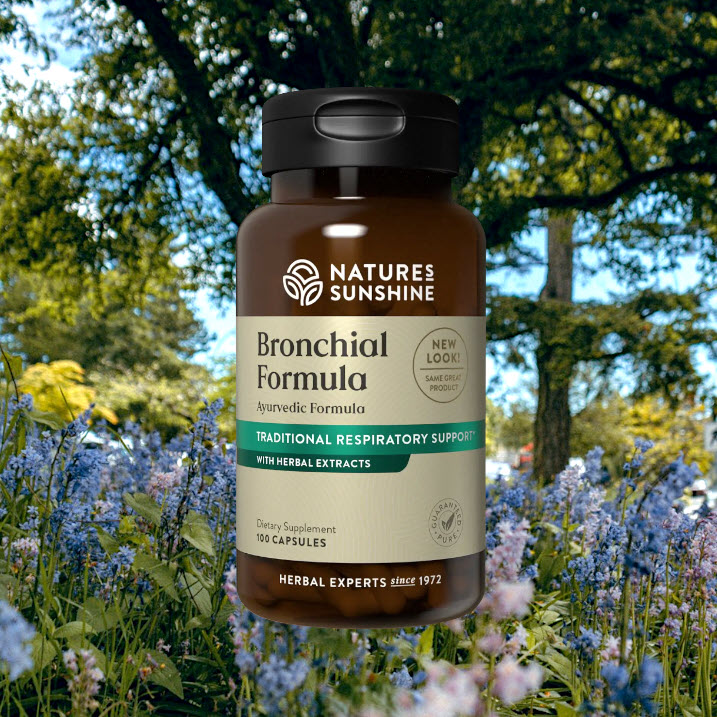
Bronchial Formula, Ayurvedic
Overview
Don’t let pollution, dust, pollen and other respiratory irritants get you going.
Experience the timeless, feel-good power of Ayurvedic Bronchial Formula, an authentic Indian herbal formula, used traditionally to support healthy respiratory function.
The respiratory system regularly encounters airborne particles such as microorganisms, pollutants, pollens and dust, as it protects delicate body tissues. As a result, the functions of the lungs and bronchi can be affected.
Support your entire respiratory system with this Ayurvedic formula, designed to offer nourishing support to the lungs and bronchi.
Our authentic Ayurvedic Bronchial Formula was developed in concert with Indian Ayurvedic masters with herbs direct from India.
Ayurvedic Bronchial Formula is true to the Ayurvedic philosophy of restoring balance to the body, using herbs traditionally revered for nourishing and promoting respiratory system health.
Ayurvedic Bronchial Formula provides time-honored herbs that support the respiratory system, including the lungs and bronchi, and may help loosen chest congestion.
Benefits
- Traditional respiratory system support
- May help to loosen chest congestion
- Contains extracts from good-for-you herbal ingredients
- Features sustainably sourced, non-GMO herbs in a gluten-free formula
How It Works
Ayurveda, Sanskrit for “The Science of Life,” is one of the world’s oldest recorded systems of natural health, preserved through the ages on scrolls and manuscripts. In Sanskrit, the word ayurveda consists of the words Äyus, meaning “longevity”, and veda, meaning “related to knowledge” or “science”. This alternative medicine system began in India more than 5,000 years ago.
The Ayurvedic view of physical and mental well-being—a healthy way of living—has experienced a renewed interest as people take a proactive approach to their personal health.
Ayurvedic philosophy is based on balance and energy, and it incorporates lifestyle, diet and herbs.
Licorice
Chinese licorice root has been a key part of many Chinese herbal formulas for thousands of years. TCM has relied on licorice root to provide respiratory and digestive system support. Most Chinese herb combinations use licorice to balance the other herbs and to promote vitality. It has a reputation for helping the entire body maintain balance and for promoting well-being. Traditional western herbalists use licorice root as a general tonic and as a natural expectorant to clear the respiratory tract and help the body combat cough. Licorice root helps to loosen and thin mucus in the respiratory tract, making it easier to cough up and clear the airways.
Mullein
Mullein contains mucilage, gum, saponins, flavonoids and other beneficial compounds. Mullein’s high mucilage content and mild saponins make it a support for the respiratory system. Mucilage absorbs water in the body and becomes slippery, which may help explain its use for soothing irritation. In the mid-16th century, German botanist Adam Lonitzer praised mullein for respiratory support, for heart health and for other benefits. More recently, in traditional Irish medicine, mullein has been cultivated for use in respiratory support. And according to the European Union Herbal Monograph, its traditional use is for soothing an irritated or sore throat linked to dry cough and cold.
Asian Bayberry Bark
Asian bayberry bark is derived from the Myrica nagi evergreen tree, which grows up to 50 feet tall in the higher elevations in some parts of southeast Asia and China. Bayberry bark, also known as Kaiphal in Traditional Ayurvedic medicine, is commonly used for respiratory system support. Research suggests that Asian bayberry bark provides antioxidant effects and helps promote a healthy inflammatory response. It may also help stabilize mast cells that release compounds when exposed to irritants, helping to combat seasonal threats and promote easier breathing.
Ginger
Ginger has been used as both food and medicine in Asia for thousands of years. Traditionally, ginger has helped with a laundry list of complaints, including cold, fever, joint discomfort, aches, cramps, nervous system support, circulatory health, and digestion. Ginger is revered in traditional Ayurveda and is referred to as “vishwabhesaj” which means “The Universal Medicine.” Ayurvedic herbal formulas employ ginger for its many respiratory health benefits such as clearing upper respiratory congestion, reducing cold symptoms, easing coughs and soothing an irritated throat.
Spiked Ginger Lily
In addition to Ayurveda, both Traditional Chinese and Tibetan medicine have used spiked ginger lily root for its many healthful properties, including supporting respiratory health. And people in Uttarakhand—near the India/Tibet border—chew this rhizome to freshen their breath.
Holy Basil
Holy basil, also known as tulsi, has been used for over 3,000 years in Ayurvedic medicine to treat immune challenges, fever and respiratory conditions, and to restore balance throughout the body and promote overall vitality. Holy basil supports immune health by improving macrophage activity (the body’s first line of defense), natural killer cell function, and immune signaling. Holy basil also helps relieve mucus congestion and opens the airways.
Ingredients
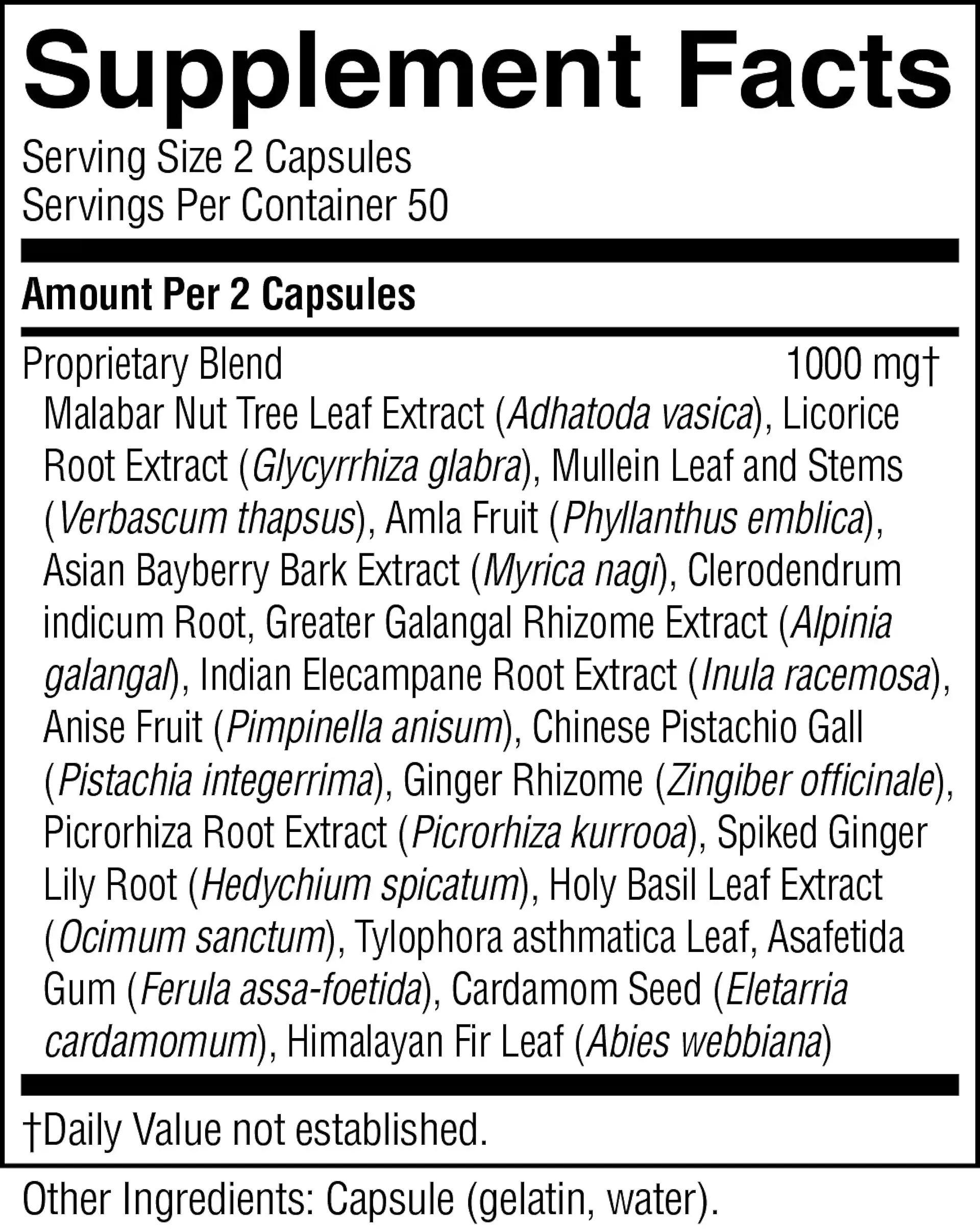
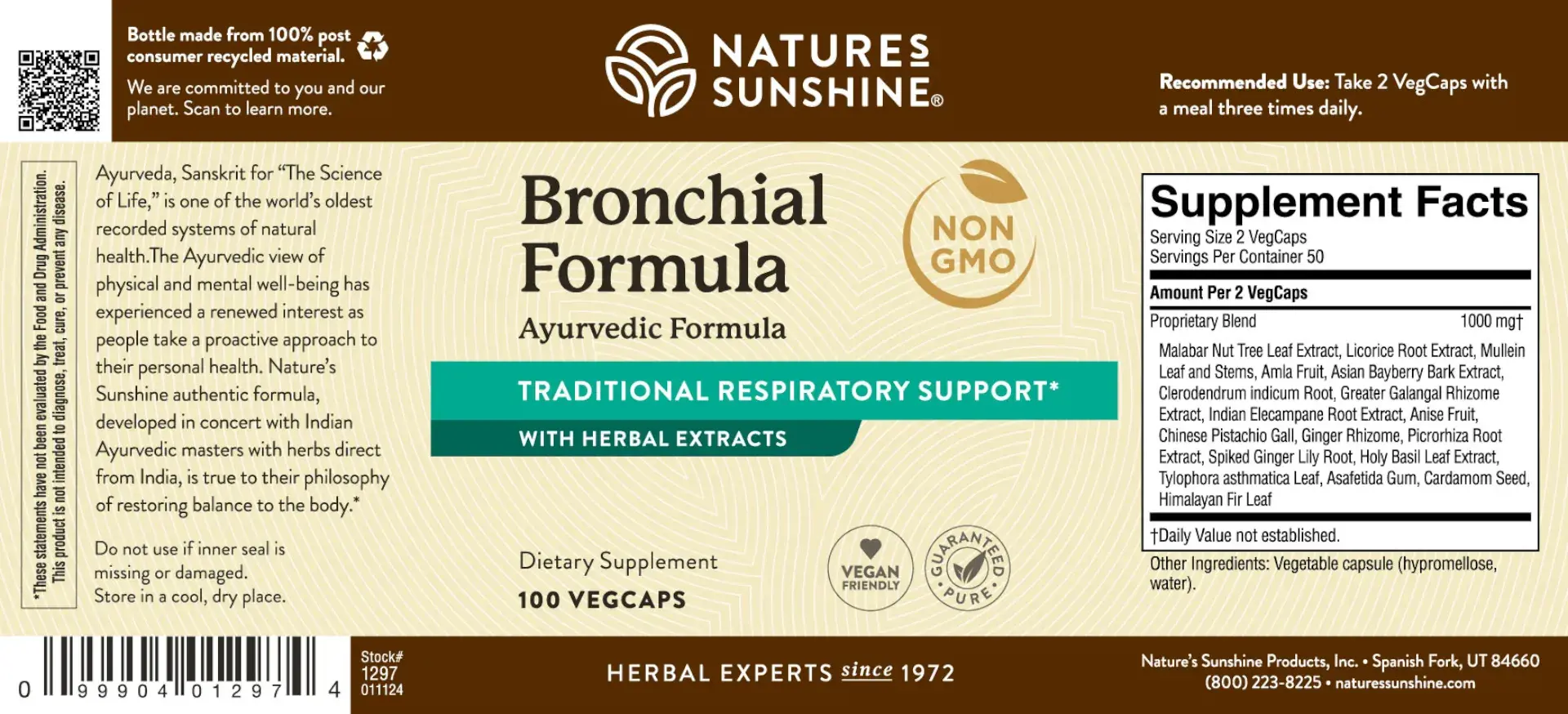
Proprietary blend of Malabar nut tree leaf extract, Licorice root extract, Mullein leaf and stems, Amla fruit, Asian bayberry bark extract, Clerodendrum indicum root, Greater galangal rhizome extract, Indian elecampane root extract, Anise fruit, Chinese pistachio gall, Ginger rhizome, Picrorrhiza root extract, Spike ginger lily root, Holy basil leaf extract, Tylophora asthmatica leaf, Asafetida gum, Cardamom seed, and Himalayan fir leaf.
Quality
In Sanskrit, the word Ayurveda means The Science of Life. This alternative medicine system began in India more than 5,000 years ago. It stems from the ancient Vedic culture and was passed down through oral tradition for thousands of years. Ayurvedic philosophy is based on balance and energy, and it incorporates lifestyle, diet and herbs.
Our non-GMO formula features herbs specially chosen for their reputation in Ayurvedic tradition. Add to this, our partnership with a trusted mullein vendor we have known for 40 years who provides employment opportunities that have supported some rural families for generations.
Recommended Use
Take 2 capsules with a meal three times daily.
Related Products

Reviews
* These statements have not been evaluated by the Food and Drug Administration. This product is not intended to diagnose, treat, cure or prevent any disease.